manifestation for life areas
Family Manifestation: 3-Minute Audio for Home Safety
Family manifestation can begin with a 3-minute audio practice that helps your body rehearse safety, steadiness, and kinder home patterns.
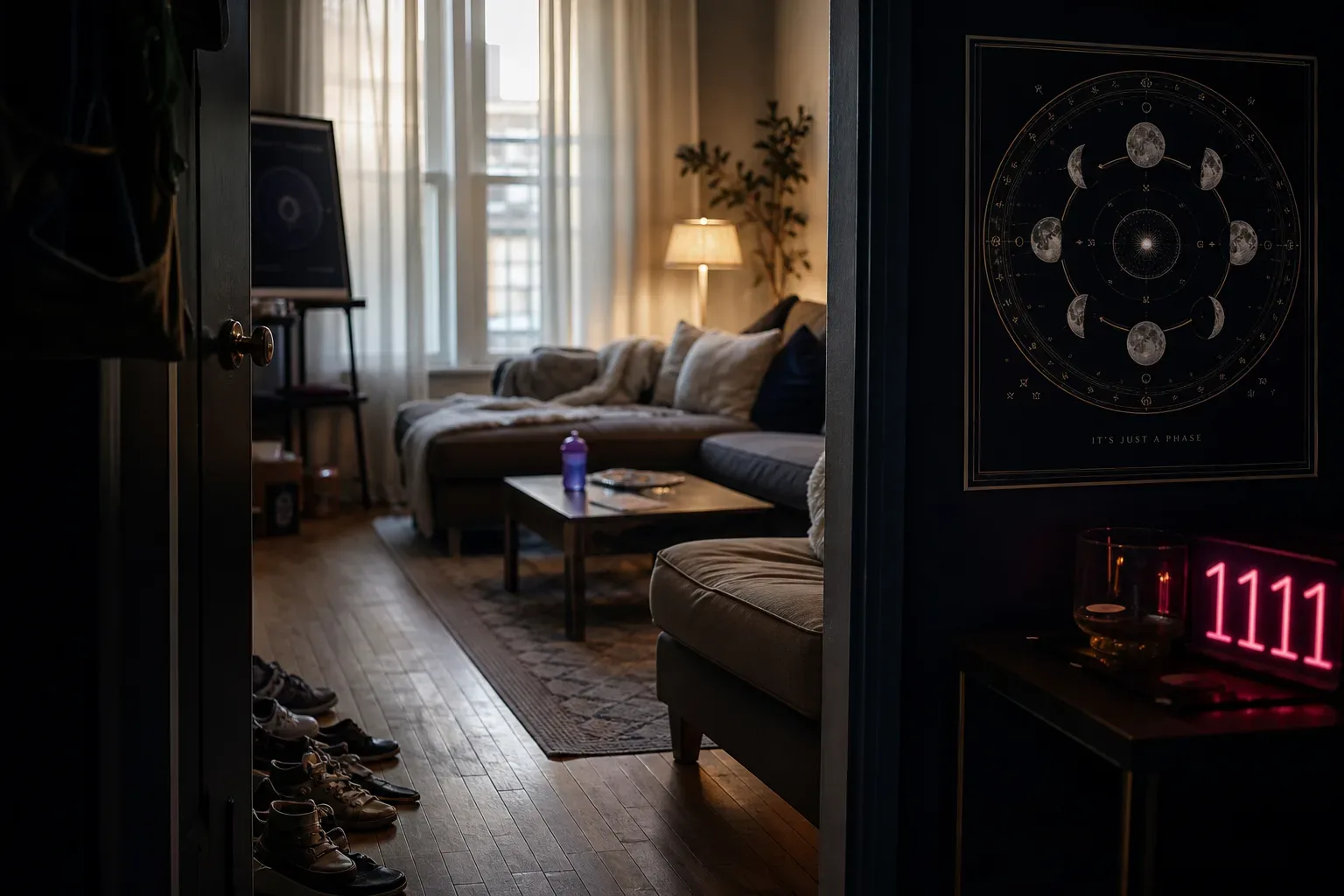
The hallway light is on. Someone has left a cup in the sink. Family manifestation starts there: with a 3-minute audio that helps you rehearse feeling safe at home, then choose one small action that matches that safer version of you.
What is family manifestation when home feels tender?
Family manifestation is the quiet practice of rehearsing a safer home from the inside, without pretending your family is perfect.
It is not mind control. It is not asking everyone in the house to become easier by Thursday. It is a way of training your attention toward the kind of home pattern you want to participate in: slower speech, quicker repair, more room to breathe, less dread at the sound of a door closing. The National Institute of Mental Health notes that the body can react to stress with muscle tension, sleep disruption, and irritability; if home has been tense, your body may enter the room before you do.
The first kindness is telling the truth. If your home is physically unsafe, this practice is not the first step. A safety plan, trusted person, hotline, emergency service, therapist, or local support comes first. The CDC has reported that about 1 in 4 women and 1 in 7 men in the United States have experienced severe physical violence by an intimate partner in their lifetime. A soft practice should never ask you to stay where you are being harmed.
For many people, though, home is not dangerous. It is strained. Too many sharp tones. Too much history in the walls. Too little repair after ordinary mistakes. Family manifestation belongs in that middle space, where you are trying to become less reactive and more clear. You are not fixing the family. You are practicing the part of the family that is yours.
A safer home is not always a quieter home. Sometimes it is a home where people can tell the truth sooner.
If you are new to the wider practice, the Manifestation pillar gives the broader frame. Here, the frame becomes very small. Three minutes. One scene. One way of entering the room with more choice.
Why does a 3-minute audio work better than thinking harder?
A 3-minute audio works because your nervous system responds to repeated cues more easily than it responds to pressure.
Thinking harder often turns into arguing with yourself. You list what should be different. You replay what was said. You plan the perfect line and then forget it when someone sighs in the kitchen. Audio gives the mind less to manage. You listen. Your breath slows. Your body receives a pattern before it has to perform one.
Three minutes is 180 seconds. That is short enough to repeat daily and long enough to include a beginning, a felt scene, and a closing cue. Behavior researchers have long found that tiny, repeated actions are easier to maintain than large resolutions; BJ Fogg’s Stanford work on Tiny Habits, for example, centers on small prompts attached to existing routines. You do not need a new personality. You need a repeatable cue.
This is where the AYA Method comes in plainly. The AYA Method is a daily audio manifestation practice. Each day you listen to a short personalized recording — your Dream-Self Moment — narrated from the version of you who has already manifested the life you intend. Listening is the practice. Repetition is the work. The audio is the method.
For family manifestation, that Dream-Self Moment might sound like you after a month of coming home differently. Not grand. Just steadier. You hear yourself say: I pause at the door. I unclench my jaw. I do not answer every tone with a tone. I let the first five seconds be soft.
The nervous system learns safety by meeting it again and again, not by being scolded into calm.
That is why audio can be gentler than a written plan. It reaches you before the argument begins.
How do you write a family manifestation script that feels true?
Write the script from a safe future that your body can almost believe.
Start with one scene. Not my whole family is healed. Not every dinner is peaceful. Choose the threshold where things usually change: the front door, the dinner table, the bedtime hallway, the phone call from your mother, the group chat with your siblings. Specificity lowers the strain. A 2021 paper in the journal Emotion found that naming feelings with more precision can support regulation; the same principle applies here. The more exact the scene, the less your mind has to fight it.
Use present-tense lines. They should be simple enough to hear when tired. If the sentence sounds like a performance, cut it. If it makes your chest tighten, make it smaller. The Affirmations pillar may help if you want more language for present-tense statements, but remember: the affirmation is a complement. The audio is the daily practice.
Try this structure:
- Name the scene: I am standing outside my door with my keys in my hand.
- Name the body: My shoulders drop. My breath comes back to me.
- Name the choice: I enter slowly. I do not rush to manage every mood.
- Name the family tone: There is more room here. We repair sooner.
- Name one action: Tonight, I speak one sentence less and listen one breath longer.
A good script does not flatter you. It reminds you.
Here is a simple comparison:
| Less useful line | More useful line |
|---|---|
| My family is perfect now | I notice the first calm moment and let it grow |
| Nobody upsets me anymore | I pause before I answer |
| Our home is always peaceful | Dinner has more room for quiet |
| Everyone understands me | I say what I mean in fewer words |
Neville Goddard often wrote about assuming the feeling of the wish fulfilled. For home, that feeling may not be triumph. It may be the small relief of not bracing before you turn the handle.

When should you listen for the best effect at home?
Listen right before the home moment you want to meet with more steadiness.
A practice works best when it has a cue. Dr. Andrew Huberman often speaks about the nervous system learning through timing, repetition, and state. You do not need to make that complicated. If the hard moment is arriving home, listen before you go inside. If the hard moment is dinner, listen while the water boils. If bedtime is where everyone frays, listen before you start the routine.
One study published in the European Journal of Social Psychology in 2009 found that habit formation took an average of 66 days, with wide variation from 18 to 254 days. That number is useful because it lowers the drama. You are not failing if the house does not feel different after two listens. You are laying down a cue.
Here are quiet places where a 3-minute audio can fit:
- In the car before opening the front door
- On a walk around the block after work
- In the bathroom before a family meal
- With headphones while folding laundry
- In bed before a hard conversation the next morning
- Outside the school gate before pickup
You can also pair the audio with one physical gesture. Hand on heart. Feet on floor. One slow exhale. Research on paced breathing is still growing, but small clinical studies suggest slow breathing can reduce perceived stress and support heart-rate variability. Keep it plain. The gesture is not magic. It is a bookmark.
If you follow moon cycles or timing rituals, you may like the softer timing notes in Astrology and manifestation. Use them as atmosphere, not as a rulebook. The most important timing is the one you can repeat.
Home changes through repeated entrances. You become someone who arrives with a little more room inside you.
What should you do after the audio ends?
After the audio ends, do one small action that proves to your body you were listening.
This is where manifestation becomes behavior. If your audio says you speak slowly, speak one sentence more slowly. If it says you repair sooner, send the text before bedtime. If it says your room is a place of safety, clear one corner of the chair instead of reorganizing the whole house. A 2018 review in Health Psychology Review found that action planning and coping planning can support behavior change, especially when they are specific.
Do not choose a heroic action. Choose the smallest visible proof. Your family system may resist big change because big change asks everyone to reorganize at once. Small change can pass through the room almost unnoticed. Then it repeats. Then it becomes real.
Try a 3-minute follow-through menu:
- Lower your voice by 10 percent.
- Leave the room before you say the old sentence.
- Ask one clean question: What do you need from me right now?
- Put your phone down for the first five minutes at home.
- Say: I want to answer better than I used to. Give me a second.
- Repair one small thing before sleep.
The word family can make the practice feel huge. Shrink it. One cup moved from the sink. One lamp turned on before the room gets dark. One apology made without a speech. The Gottman Institute’s relationship research often points to repair attempts as key predictors in couple stability; the wider family version is similar. Repair does not have to be elegant. It has to arrive.
The smallest honest repair can change the temperature of a room.
This is also where a Manifestation Board can help as a complement. You might save one image of a table with enough chairs, a hallway with shoes in a row, a soft lamp beside a bed. The board is the visible reminder. The audio remains the method.
How do you keep family manifestation from becoming control?
You keep it clean by manifesting your participation, not other people’s obedience.
This boundary matters. Family manifestation can become a sneaky attempt to script everyone else. My partner stops being defensive. My child becomes easy. My father finally says the exact sentence I need. That may be understandable. It is also too heavy. Other people have their own histories, nervous systems, choices, and limits. You cannot ethically use a practice to erase them.
A cleaner script says: I listen without abandoning myself. I ask for what I need. I notice when I am trying to manage everyone. I can leave a conversation and return later. These lines keep your agency intact. Pew Research Center has reported that family remains one of the most important sources of meaning for many adults, but meaning does not remove boundaries. Love still needs edges.
Use this check before recording:
- Does this line require another person to change instantly?
- Does it deny a real pattern I need to address?
- Does it make me smaller to keep the peace?
- Does it help me choose one next action?
- Would I say this to a friend in the same situation?
If the line makes you disappear, rewrite it. If the line turns someone else into a puppet, rewrite it. If the line helps you stand in the room with a little more truth, keep it.
You can read more about the broader ethics and language of intention in the Manifestation pillar. The short version is simple: practice should make you more honest, not more controlling.
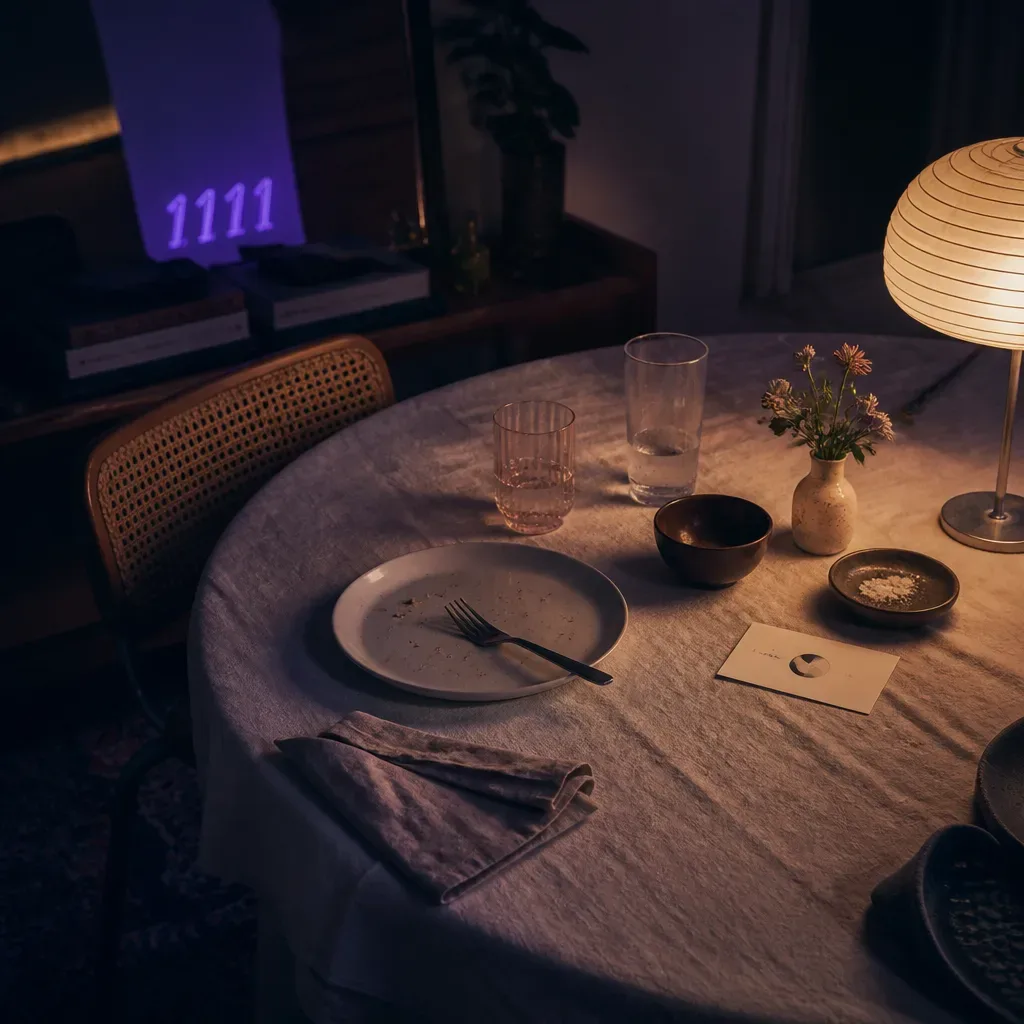
You are not asking the house to lie. You are teaching yourself how to enter it truthfully.
What does a complete 3-minute family manifestation audio sound like?
A complete 3-minute audio sounds like a calm future memory of you feeling safe enough to act differently at home.
Here is a sample you can adapt. Read it slowly. Leave space between the lines. Three minutes is usually 350 to 450 spoken words, depending on pace. Professional voiceover averages around 130 to 160 words per minute, but a calming recording can be slower. Let it breathe.
I am outside my home. My hand is on the door. I can feel my keys. I do not rush.
My shoulders drop before I enter. My jaw softens. I remember that I do not have to carry every mood in the house.
When I step inside, I look for one true sign of safety. The lamp. The floor under my feet. The sound of water. My own breath.
I speak more slowly here now. I do not answer sharpness with sharpness. If I need a pause, I take one. If I need to leave the room, I leave without making it a punishment.
This home is learning repair. So am I. We do not do it perfectly. We do it sooner than before.
At dinner, I listen one breath longer. At bedtime, I make the room softer. In the hallway, I let my body know: I am here now. I am not the old alarm.
I can love my family and still have boundaries. I can want closeness and still tell the truth. I can be kind without disappearing.
Tonight, I choose one small action. One sentence less. One breath more. One repair before sleep. That is enough for today.
After you record it, listen for seven days without editing. Joe Dispenza often speaks about mental rehearsal and emotional state as a daily discipline; you do not need to copy his whole framework to borrow the useful part. Rehearse the state. Then behave from it once.
If you want to pair the audio with one written sentence, choose a daily affirmation after listening, not before. The order matters here. Listening leads. The written line supports. For more language ideas, keep Affirmations pillar nearby, but let the recording be the daily return.
The house may still be noisy.
Enter softly anyway.