manifestation 101
Lucky Girl Syndrome as 3-Minute Dream-Self Audio
Turn lucky girl syndrome into a grounded 3-minute Dream-Self audio practice that trains attention, identity, and daily evidence.
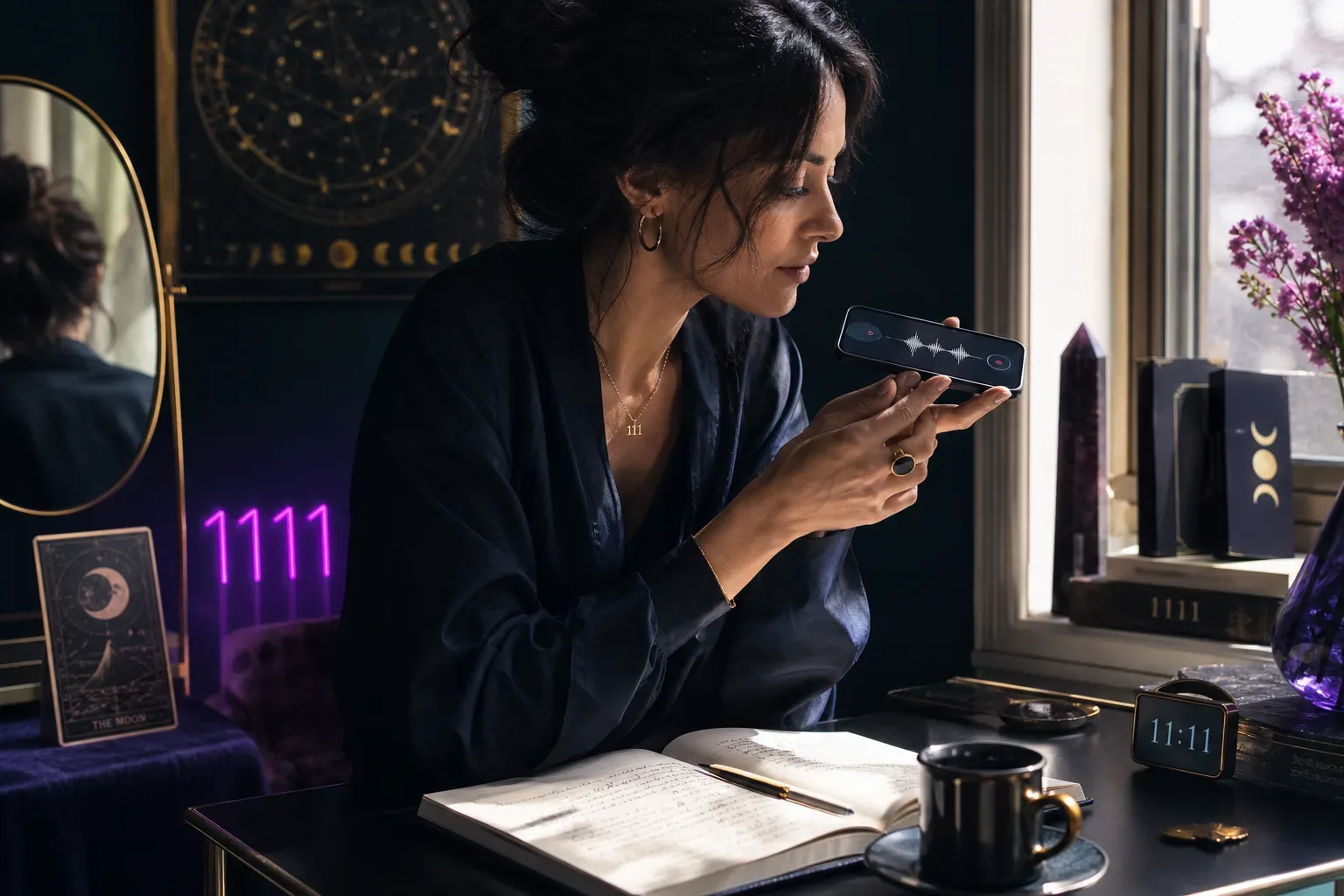
Lucky girl syndrome becomes useful when you turn it from a slogan into a 3-minute Dream-Self audio: one specific future scene, repeated daily, narrated as evidence. The point is not to pretend everything is easy. The point is to train attention toward openings you can actually meet.
What is lucky girl syndrome really asking you to practice?
Lucky girl syndrome is asking you to practice selective attention with a better script.
The trend usually sounds like this: I am so lucky, everything works out for me. It arrived through TikTok culture around 2022 and 2023, the same period when short-form self-concept content became a daily ritual for millions. The sentence is catchy because it is simple. It is also dangerous when left unedited.
Your brain is already selective. The reticular activating system is often named in pop psychology because it filters incoming sensory data, though the full neuroscience is more complex than the internet version. The practical point holds: attention changes what you notice. If you buy a red coat, red coats appear everywhere by Friday.
Lucky girl syndrome, at its cleanest, is not magic. It is a cueing system. You give the mind a line, then you ask it to gather evidence. Research on implementation intentions by Peter Gollwitzer, first formalized in 1999, found that if-then planning can significantly increase follow-through because the cue is preloaded. A lucky assumption works best when it becomes that specific.
Luck is not the absence of effort. Luck is what effort can recognize when the room opens.
That is where audio changes the dial. A sentence you scroll past at 11:11 is a spark. A 3-minute recording you hear every morning is a pattern. If you already study Manifestation pillar, you know the difference between wanting and rehearsing. Wanting is loud for a minute. Rehearsing changes what feels normal.
The goal is not to become untouchable. The goal is to become available to the right signal, sooner.
Why turn lucky girl syndrome into Dream-Self audio?
Dream-Self audio gives lucky girl syndrome a body, a time stamp, and a witness.
A written affirmation can be useful. So can a sticky note on the mirror. But audio enters differently. You do not only read the claim; you receive it. Dr. Andrew Huberman has often discussed how repeated audio practices, including breath-led protocols and NSDR, can affect state by giving the nervous system a predictable cue. A 3-minute track is short enough to repeat and long enough to create a scene.
This matters because vague optimism ages badly. The line everything works out can collapse the first time rent, rejection, or a quiet no enters the room. A Dream-Self Moment names the version of you who has already crossed that particular bridge. It can include friction without worshiping it.
Here is the clean distinction:
| Format | What it does well | Where it fails |
|---|---|---|
| Lucky slogan | Fast state shift | Too vague under pressure |
| Written affirmation | Easy repetition | Can feel flat or forced |
| Vision note | Adds imagery | Often stays outside the body |
| Dream-Self audio | Creates identity rehearsal | Requires honest scripting |
The method I return to is the AYA Method: The AYA Method is a daily audio manifestation practice. Each day you listen to a short personalized recording, your Dream-Self Moment, narrated from the version of you who has already manifested the life you intend. Listening is the practice. Repetition is the work. The audio is the method.
Notice the order. The audio holds the practice. A daily affirmation can complement it. A Manifestation Board can complement it. Neither is the spine.
In Psychological Science, a 2005 study by Creswell and colleagues found that self-affirmation buffered stress responses in a high-pressure task. That does not mean any pretty sentence will do. It means self-relevant words can change how we meet pressure when the words are credible.
How do you write a lucky girl script that does not sound fake?
You write a lucky girl script by making every line specific enough for your nervous system to believe.
The fastest way to ruin this practice is to overstate. If your current life feels like a locked door, do not record I get everything instantly. Your body will hear the fraud before breakfast. In a 2009 Psychological Science paper, Joanne Wood and colleagues found that very positive self-statements could make people with low self-esteem feel worse. The issue was not positivity. The issue was distance.
The better script sits one step ahead, not eleven floors above. It sounds like your future self after the shift has become ordinary. She is not performing certainty. She is reporting from the other side.
Use this 5-part structure:
- Name the gate. Choose one area: money, work, love, health, timing, home.
- Set the scene. Put your Dream Self somewhere ordinary: kitchen, train, desk, evening walk.
- Add proof. Mention 3 concrete signs that the new assumption is active.
- Include agency. Name what you now do differently.
- Close with return. End with a sentence you can hear every day for 11 days.
For example, instead of I am the luckiest girl alive, try: I notice the right opening quickly now. I answer cleanly. I stop chasing rooms that do not answer back. Better. The dial has markings.
A believable future is more powerful than a glamorous lie.
If you want to use classic affirmation craft, borrow from the Affirmations pillar: present-tense language, emotional precision, and repetition. But do not let affirmation culture flatten the scene. Your Dream-Self audio should feel like a voice memo from a future Tuesday, not a billboard.
One number helps: 180 seconds. At a slow spoken pace of about 120 to 140 words per minute, a 3-minute audio gives you roughly 360 to 420 words. That is enough for a scene, evidence, and a return line. Not enough for a speech. Good. Speeches are where the fake sentences sneak in.
What exact 3-minute structure should you record?
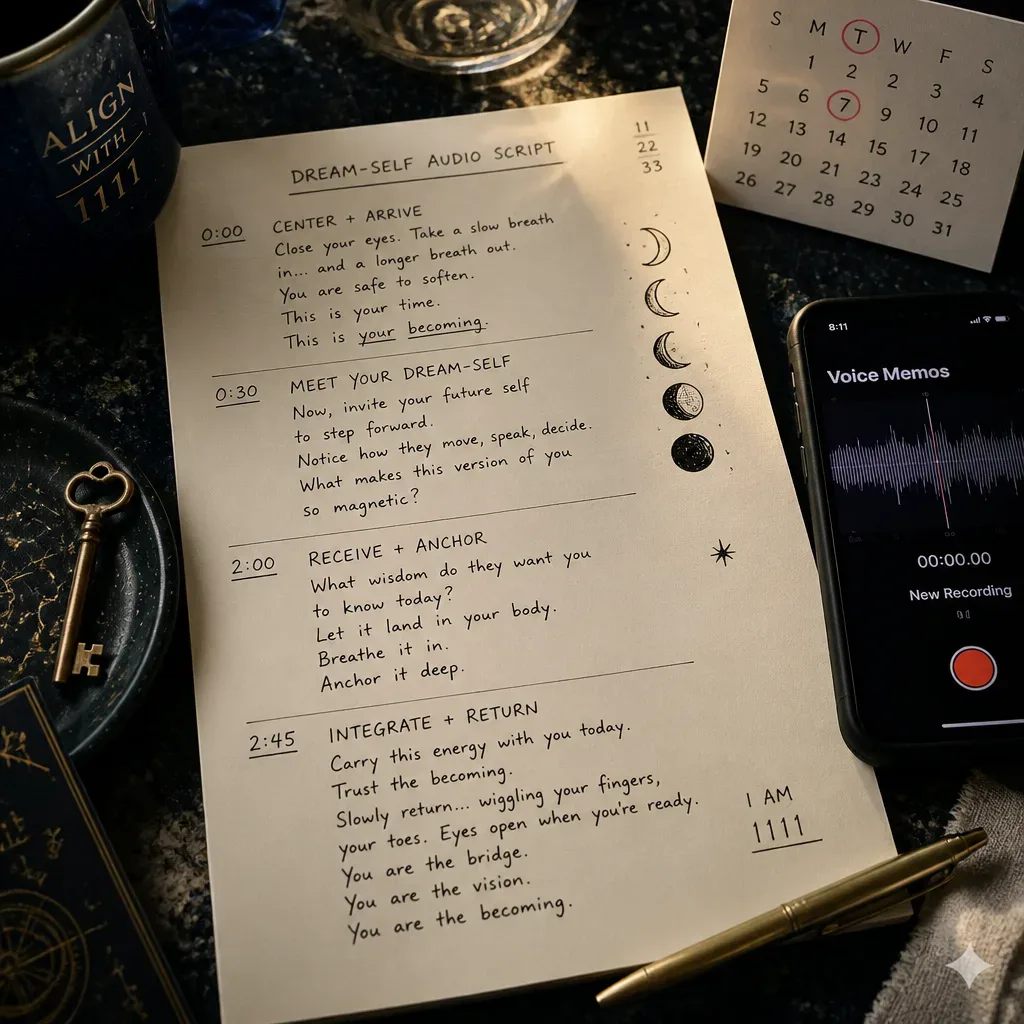
A strong 3-minute Dream-Self audio uses 30 seconds of arrival, 90 seconds of evidence, 45 seconds of identity, and 15 seconds of return.
This timing keeps the audio from becoming a wandering monologue. It also respects attention. A 2023 American Psychological Association report on stress noted that adults often report feeling cognitively overloaded; whether your number is 3 minutes or 30, the practice has to fit real mornings. Three minutes can sit between coffee and shoes.
Here is the structure I use at my desk before coffee, usually before the inbox starts making threats.
The 3-minute lucky girl audio map
- 0:00 to 0:30, Arrival: Describe where future you is and what her body knows.
- 0:30 to 2:00, Evidence: Name 3 ways life has started meeting her differently.
- 2:00 to 2:45, Identity: Describe the choices she makes because she trusts timing.
- 2:45 to 3:00, Return line: Close with one sentence that can follow you all day.
A sample opening:
You are standing at the kitchen counter, phone face down, the morning quiet around you. You are not waiting for proof anymore. Proof has been arriving in clean, specific ways. The email came on Tuesday. The conversation opened without forcing. The person who could help remembered your name.
That is not fantasy. That is rehearsal with details. Joe Dispenza often speaks about mental rehearsal as a way of conditioning the body toward a chosen future state. You do not have to accept every claim in his broader framework to use the practical piece: repetition teaches the body what to expect.
The future self is not a costume. She is a set of repeated instructions.
The lucky girl line can still appear, but edit it until it earns its place. Say: I am lucky because I recognize timing. I am lucky because I prepare before the gate opens. I am lucky because I no longer confuse delay with denial.
If you track moon cycles or master numbers, keep them as punctuation, not proof. The number 11 is traditionally treated as a master number in modern numerology, associated with intuition and signal. Fine. Let 11:11 remind you to listen. Do not make it do your work for you. For a grounded take, see Astrology and manifestation, where timing is treated as a mirror, not a command.
How should you record and listen so the practice actually lands?
Record it simply, listen daily, and track one piece of evidence after each play.
Use your phone. Use the voice memo app. Do not wait for the perfect microphone, the perfect silence, or the perfect version of your future voice. The practice needs contact, not production value. In habit research, consistency beats intensity with almost comic regularity. A 2009 study by Phillippa Lally and colleagues in the European Journal of Social Psychology found habit formation took an average of 66 days, with wide variation from 18 to 254 days.
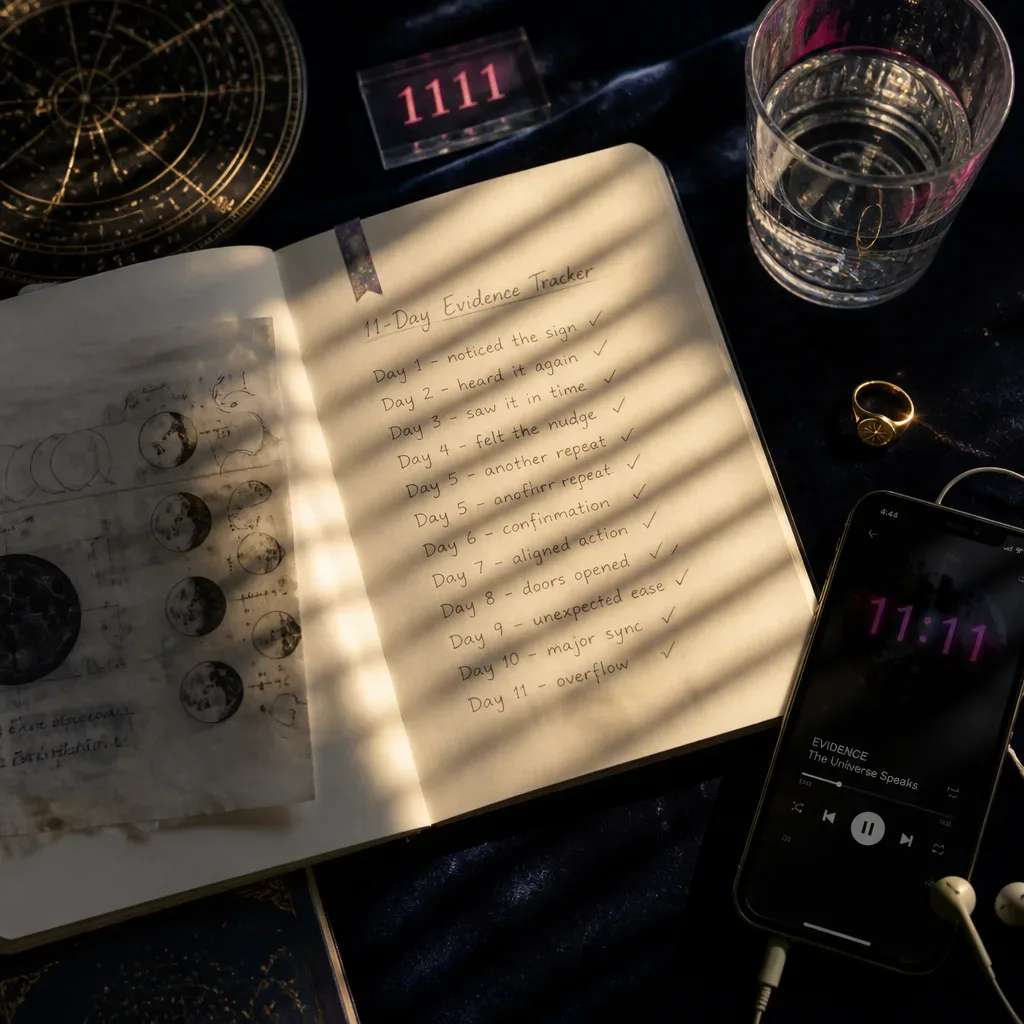
For this practice, start with 11 days. Eleven is not a lab number; it is a ritual number, a clean gate. It is long enough to catch resistance and short enough that you will not turn the whole thing into a personality test.
Use this recording checklist:
- Sit upright so your voice has steadiness.
- Record at a slow pace, around 120 words per minute.
- Use first person if you need intimacy: I know how to meet the opening.
- Use second person if you need to receive it: You know how to meet the opening.
- Leave 2 seconds of silence after the strongest lines.
- Do not add music unless it helps you listen, not perform.
After listening, write one line of evidence. One. Not a page. The evidence can be small: the call was easier, the timing changed, I did not chase, I noticed the option. The Princeton Engineering Anomalies Research program, active from 1979 to 2007, remains controversial, but its long obsession with intention and random systems points to a cultural fact: people keep trying to study whether attention and intention meet matter. Your notebook is smaller. It only has to show you what your attention is collecting.
What mistakes make lucky girl syndrome less useful?
Lucky girl syndrome becomes less useful when it denies reality, borrows someone else’s desire, or skips action.
The denial mistake is the most common. If a bill is unpaid, do not record money loves me and stop there. Record: I answer money directly now. I open the account. I make the call. I notice the next clean way forward. That is still a lucky girl script, but it has a spine.
The second mistake is aesthetic theft. Social media makes other people’s lives look like instructions. They are not. Pew Research Center reported in 2021 that 31 percent of U.S. adults said they were almost constantly online. That is a lot of borrowed rooms entering the nervous system. Your Dream-Self audio should not sound like the woman with the marble kitchen unless you actually want the life that kitchen implies.
The third mistake is treating signs as substitutes for decisions. Angel numbers, lunar timing, and synchronicity can be useful witnesses. Doreen Virtue helped popularize angel-number language, though her later public distancing from that work is part of the record. Use the numbers if they help you notice. Do not outsource your next move to them.
Here is the editorial test:
| If your line says… | Ask this instead |
|---|---|
| Everything always works out | What evidence would I notice today? |
| I never struggle | How do I recover faster now? |
| People choose me instantly | Where do I stop auditioning? |
| Money appears from nowhere | What channel can money actually use? |
A sign is not a strategy. It is a knock on the door.
If your audio makes you passive, revise it. If it makes you frantic, soften it. If it makes you honest and more available to the day, the dial is lining up. Return to Manifestation pillar when you need the wider frame: manifestation is not wishing harder. It is identity, attention, emotion, and action moving in the same direction.
How do you know the audio is working?
You know the audio is working when your attention, choices, and emotional recovery begin to change before the outer result is complete.
Do not measure only the big arrival. Big arrivals are late indicators. The first signal is usually quieter: you answer the email without spiraling, leave the wrong room sooner, ask for the number, notice the invitation, sleep after the no. Tara Brach often teaches the power of pausing and naming what is present; that pause is not passive. It interrupts the old trance.
For 11 days, track 3 categories:
- Attention: What did I notice that I might have missed?
- Action: What did I do sooner or cleaner?
- Recovery: Where did I return to myself faster?
This is how lucky girl syndrome matures. It stops being a declaration and becomes a daily audit of evidence. In clinical and coaching contexts, self-monitoring is one of the most reliable behavior-change tools; even simple tracking is associated with better adherence across health studies, including weight-management research reviewed in the Journal of Medical Internet Research.
You are not trying to prove that every event is secretly favorable. You are training a finer relationship with timing. Some doors close because they are closed. Some close because you are being redirected by your own standards. Some close because the person on the other side does not have the range. Your audio helps you hear the difference.
If the practice starts to feel stale after 11 days, update the evidence section, not the whole identity. Keep the same return line for another cycle. Repetition is what lets the sentence move from performance into recognition.
And if you want a broader daily container, return to the AYA Method. The Dream-Self Moment is built for exactly this: the future writing back in a voice you can replay.
Leave the phone face down, and listen for the line that still feels true.